

Expectations
What can we really count on?

I learned from Chip that little dogs live longer than big ones. He proved it by staying healthy for sixteen years. So when I got Josie—my “replacement” little dog after not being able to stand Chip’s absence—I figured I could count on the same. But recently, I was surprised to learn that something serious may already be going on with her at the age of ten that could end her life much, much sooner. In fact, I don’t know how long we’ve got left together.
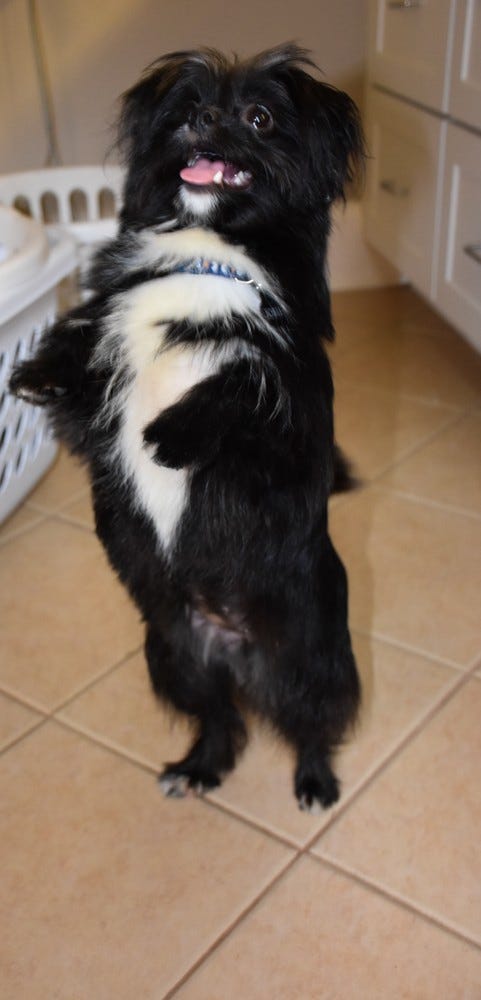
Given that mortality is our subject here most weeks, this should not be a surprise to any of us, especially me, that we don’t know how much time we’ve got left. But still, I expected sixteen and I may only get ten. I expected my late husband to live well past forty-nine as well. So is it the expectations that get me in trouble?
Our Death Dates
I’ve read the statistics about our life expectancy. Given how long I’ve already lived, my remaining life is estimated to be another twenty-three years. It’s weird to learn that, to put an actual age on my death that has been formulated somehow by data at the CDC and SSA. The longer you live, the more years get added to the end just because you’ve already survived some milestones.
My mother-in-law is expected to live to ninety-five now that she’s made it to ninety-two. But they figure I’ll only make it to eighty-two. So she gets another ten years on me, and I’m okay with that. I think. Those extra ten years don’t look very fun. Of course, if you come to me at eighty-two and say, “Okay, it’s your turn now,” I’d probably cry that I wanted more time (as she recently did – well, not cry, but I was surprised she felt the desire to keep going given how often she bemoans old age).

Our wish to keep living is strong. We don’t need to have good lives to want to keep going. Sometimes this could be because we’re afraid of what might come next in the great unknown. Hell on earth is at least familiar. It could also be that we get a number in our heads, or an idea of something we should experience before we die, or we can’t afford to leave because someone depends on us. That’s the expectation part, but it’s a falsehood. I won’t necessarily outlive the feral cat who only trusts me, or my husband who could not face being widowed again, or my sisters who think I’ll be around after they’re gone. Just because we expect it doesn’t mean we’ll get it.
It’s Not Just About Death
I expect a lot more than years of life. I expect to keep my wits about me, and at least some of my hair. I expect that a lunatic won’t blow us all up just because he feels like it. I expect that somebody somewhere is in charge of the really important things (not sure about that but I still expect it). I expect that wrongs will eventually get righted, and rights will eventually be rewarded with opportunities to spread good in the world.
If you asked me what I base any of these expectations on, I’m not sure how honest an answer I could give. I think about my expectations a lot but I don’t really consider the reasons I have them. Some guesses for having expectations:
Maybe they’re just wishes
Maybe I took a scientific probability and cemented it in certainty
Maybe I’m basing future expectations on prior experience
Even when expectations turn out to be accurate, they can still be shocking. Your partner’s or pet’s death will still be a shock to you whether or not you expect it. If you get lung cancer even after a life of smoking, you might still be shocked, as my father was. He even found the desire to quit smoking practically the minute he received his diagnosis.
Expectations of Others
There are expectations that society has that you may not share, and that pressure can be shaming. I think of the women I know who never married and all the questions and puzzled looks they’ve had to endure. People may not say, “What’s wrong with her,” but you can feel the question anyway. If the woman herself also held that expectation without the result, then she probably feels doubly ashamed. Maybe she’s asking herself “What’s wrong with me?” simply because she thought something would happen that didn’t.


Maybe it’s possible to let some of this go. I will get as many days with Josie as she has left to live. I want more but I know it’s not up to me. The only caveat here is that my mind quickly goes to blame. Maybe I should not have given her those monthly pesticide medicines. I’ll never know if my decisions over her little life affected how much of it she has. And that’s also something I just have to live with. Sometimes I decide to turn over my decisions about her medical care. The professionals are supposed to know, and they certainly have more knowledge than I, so it is reasonable for me to expect good guidance. If it turns out that’s not the best path, then that’s a mistake she and I will both have to endure.
Life is complex. I don’t always know if I’m doing it right. But I want my next twenty-three years to feel good, and worry is something I don’t have to hold onto. My expectations need to get swept out too. We do the best we can as we’re able and I’m still learning. May you find peace in wherever life has put you. Thanks for reading.

I am so sorry about your sweet Josie . We all try and make the most of growing older and staying healthy . I don’t want to think about how long I am expected to live but just try and stay in the moment and enjoy the goodness of it all ❤️
What we hope for or expect is the storyline we create to soothe or motivate or castigate ourselves. What actually happens is the life we have to figure out how to live as best possible. It's hard to let go of the storyline and just be--I guess that's what this practice of living is all about. Thanks for spurring me to think about that with your thoughtful and candid essay, Trevy. And I'm so sorry about Josie. Hugs to you.