

Can You Engineer Community?
Why all the good towns are old

I saw a house for sale in a community near me for quite a lot of money. No, I’m not moving again. I haven’t lost my mind to that degree yet. But the real estate sites are onto me now and they send cute pictures I can’t resist. This house was a lovely craftsman, for which I have a weakness. So I looked, curious as to where this high-priced home was located, and saw that the whole thing was a fake. Not the listing or the price, but the attempt at replicating a well-made old house in a proper town. I got my bearings from looking at the map and recognized it as an area we’ve walked with the dogs.
I’ll skip ahead to the end and tell you what went wrong with this place.
Overpriced
Houses crammed together
Builder’s development pretending to be a town
No destination for walking
Manmade walking paths that don’t feel like nature or town
What I felt when walking through that neighborhood was the very strong presence of a developer. Him (are they always male?) calculating how much he’d make if he crammed in the maximum number of houses allowed per acre. Awarding business to the cheapest builder. The occasional bench thrown in to look homey. Basically, a money-making project (which it is) and not an attempt at creating community (which it’s not). Maybe we could find a way to reward a business or person who can do both at once.
Home Matters
Home is important to our mortal presence here. It’s the environment from which our lives happen. Your home and neighborhood and the people nearby have an enormous impact on your life quality. If you’ve chosen distance and open country, and you can manage it, that’s an entirely different lifestyle which I also appreciate. But this is for the people who’ve decided to live in or near other mortal beings. And since I’ve recently made that change, I pay attention to it.

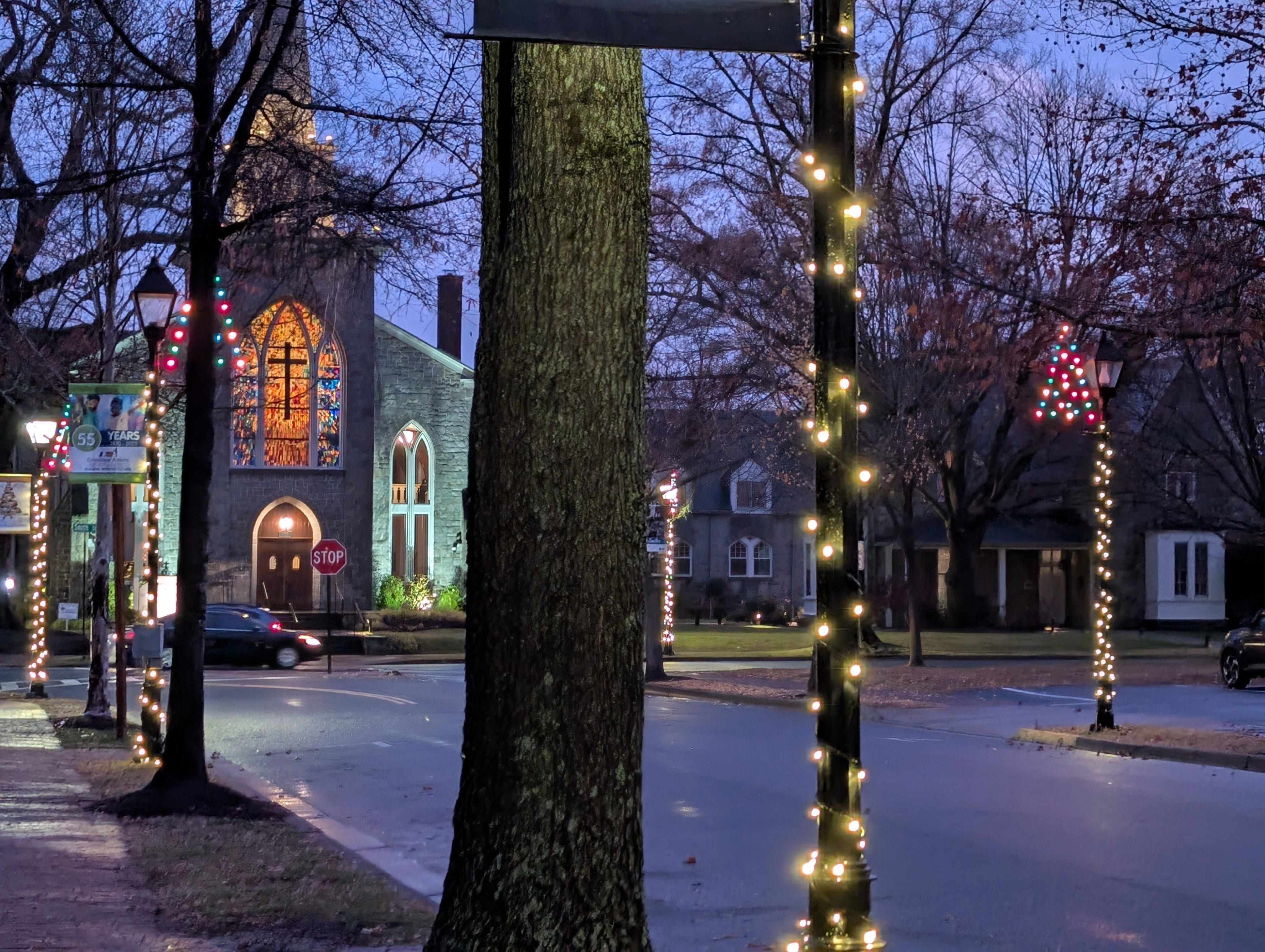
An old town that’s been standing for a long time has an entirely unique feeling. It’s ghostlike even when overflowing with people. You can’t help but realize that centuries-old humans walked these same sidewalks, entered the same old buildings to buy things or mail letters or pray. Some of those old churches are so beautiful I want to go inside just to see more, which is a far cry from how I feel about new church buildings. The houses each have their own shape and character, which is so different from a row of houses built exactly the same with repeated materials. Many old houses are well built and will outlast most of their inhabitants.
But I’m not sure any of this is what creates the feeling of a real town that’s so different from a development. And since I like towns, I wonder why there are so many more developments instead. Maybe it’s impossible to recreate a town. Probably money is a factor. Maybe developers are not the ones to put in charge of these projects. There’s a word I think for people who do this kind of civic planning but I’m not aware of any newly-built town that works as successfully as the old ones.

For one thing, a town needs to be walkable. That means sidewalks need to lead to places. Restaurants, coffee shops, small grocers, a dog groomer, schools, boutiques, charities. All of these places become employers too so that maybe the people who live in town can stay in town. It seems to come down to foot traffic. Being out of your car is how you meet other residents, and that’s how a sense of community is shaped. If any of you are planners (or whatever it’s called), you’re probably nodding along like my discoveries are completely obvious.
But why don’t we do this more? I’m not the only one who likes living this way. Houses sell pretty quickly in towns. I wonder if it’s really possible in our modern lifestyle to create new towns and if not, why? Could you just install all the commercial aspects of a regular town into a current housing-only development and make it more townlike?
I wonder, too, if these old towns we have were planned this way from the beginning or if they just got built out by happenstance. Some industrious person decides to build a grocery store as a way of earning a living and everyone around him benefits from having a grocery they can walk to.

One of my neighbors has lived here a very long time and I can tell it’s a kind of end-of-life plan for her. She walks everywhere. She’s mentioned dismay that the once-walkable grocery store is gone, being replaced by townhouses. “How are people supposed to get groceries if they don’t drive?” she asked me. “I guess they have to get them delivered,” was my response but I know it’s not a good one. My mother-in-law who lives in the city and doesn’t drive wants to pick out her own food. She also doesn’t want to pay an upcharge for someone to do it for her. And, like it was for my father at the end of his life, a grocery store becomes a regular form of contact with other humans at a time of life when most of their people have dwindled away.
Staying Put
I’m hoping this town doesn’t keep losing its resources that serve the inhabitants in favor of more planned developer-style housing. Because while people need housing, they also need all the rest that a real town provides. If you take that away, the people will just have to move in search of another small town that hasn’t yet made shortsighted plans.
Thank you for sharing your brief mortal life with me. May your surroundings help you thrive.

Related:
I think it does come down to money, and the angst and limitations that come with it, either in surplus or scarcity. And as they say, thinking (of other ways to function) is hard!
Totally agree with the church appearance, old v. new. Somewhere along the line, an attempt to make houses of worship to be hip and happening let the shift take place. Blah.
Delightful article, Trevy!